Mary berry Cold Lemon Soufflé: The Secret to No Weeping
Billowy, pale lemon, and spoonable with a clean slice—this is the cold soufflé texture people want, without the dreaded weep (that little puddle of liquid at the base).
Mary famously warns against rough handling once the gelatine is in play, because over-whisking after setting begins breaks the air bubbles and turns your soufflé tight and slightly rubbery.
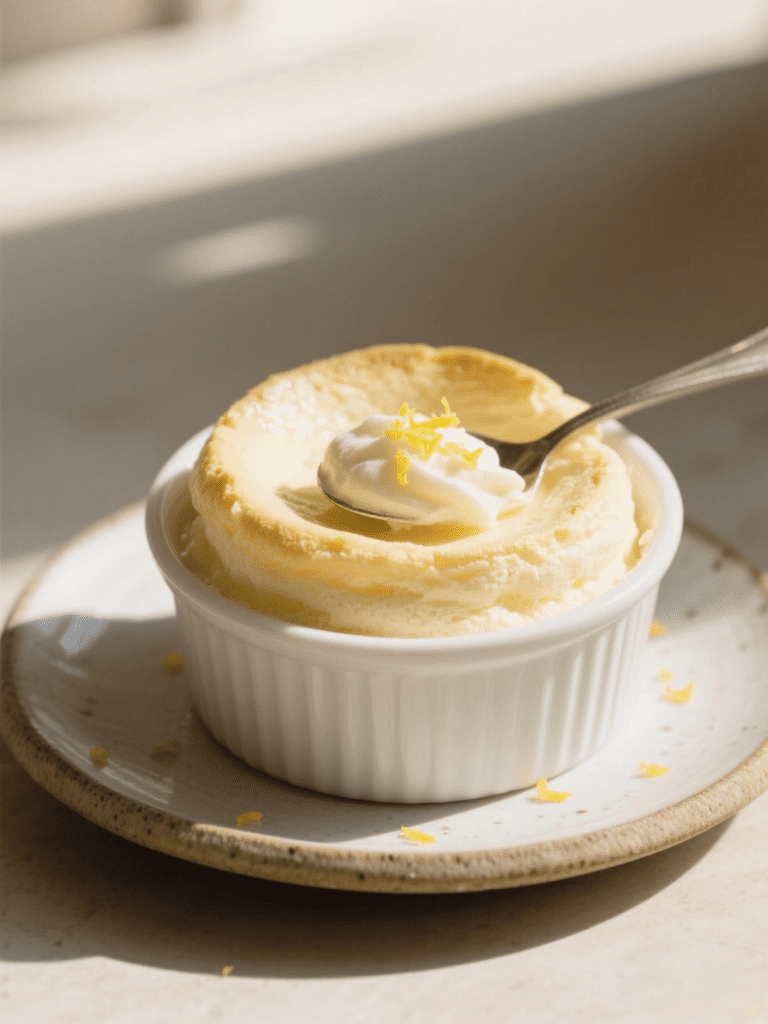
This version is foolproof because it treats gelatine like a precision ingredient (not a guess), and it controls two things most recipes ignore: temperature and acidity.
Get those right, and you get height, satin smoothness, and that classic Mary Berry “scrumptious” lightness.
The Science Behind Mary’s Technique
Cold lemon soufflé is basically a foam (air) held up by a protein network (egg whites/cream) and a gel network (gelatine), flavoured with an acidic lemon base.
Mary Berry-style success comes from building structure in stages so nothing collapses when chilled.
Culinary Logic (why this works):
- Gelatine must be fully dissolved, not just melted. Undissolved specks act like tiny knives that puncture foam bubbles, leading to slump and weeping.
- Acid + protein timing matters. Lemon acid can tighten proteins; adding the lemon base before the foam is ready can knock volume, while adding it gently to a stable foam keeps loft.
- Whipping level is the safety rail. Soft peaks for cream and stiff (but not dry) peaks for egg whites gives lift without a grainy, brittle structure that collapses in the fridge.
Ingredients & The “Berry” Standard
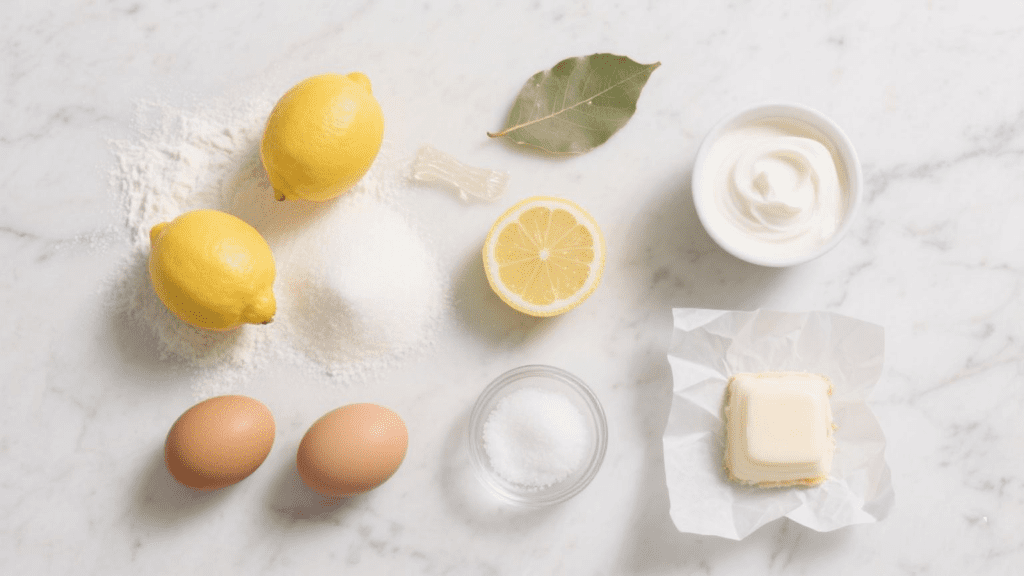
Below are the ingredients you actually need, with Mary-style buying notes so the texture behaves.
- Unwaxed lemons (zest + juice)
Quality marker: heavy-for-size lemons with thin skin. You want fragrant zest (oils = flavour) and clean acidity.
Don’t skimp on zest; it’s where “lemony” lives without extra liquid. - Caster sugar
Mary insists on caster sugar, not granulated, because it dissolves quickly and avoids gritty lemon base.
A gritty base makes the soufflé feel heavy, even if it’s full of air. - Eggs (separated)
Choose large British eggs if you can; volume is more predictable.
No yolk in the whites—even a smear of fat reduces foam strength. - Gelatine leaves (platinum grade if possible)
Leaves are consistent when treated properly.
Weigh and follow the pack if your brand differs; leaf strength varies. - Double cream (full fat)
Mary would say full fat, always—it gives a softer set and protects against a brittle gel.
Don’t swap to low-fat; it’s the fast track to a watery base. - Greek yogurt or full-fat crème fraîche (optional but very Mary)
This rounds the lemon and makes the mouthfeel “calm” and creamy.
Use full fat or skip it; low-fat can split. - Pinch of fine salt
Not for saltiness—just sharper lemon flavour.
For the classic collar:
- Greaseproof paper + string/tape
The collar is what gives that proper soufflé “rise” above the rim.
Step-by-Step Method
Prep the Dish + Collar for Real Height
1) Choose serving dishes.
Use a 1.2–1.5 litre soufflé dish or 6–8 ramekins.
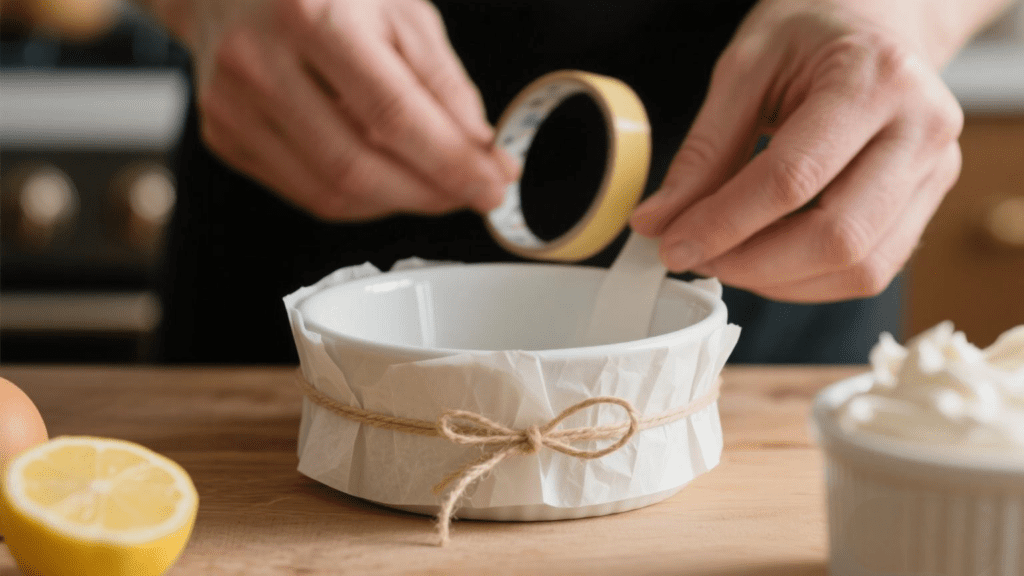
2) Make the collar.
Cut a strip of greaseproof paper tall enough to sit 5–6cm above the rim, wrap it around, and secure tightly with string or tape.
You know it is ready when… the paper sits snugly with no gaps, and you can lift the dish without the collar sliding.
Build the Lemon Base
3) Zest and juice.
Finely zest the lemons, then juice them and strain out pips.
4) Warm the yolk mixture gently.
In a heatproof bowl, whisk egg yolks with caster sugar until slightly thickened, then warm over a pan of barely simmering water (a gentle bain-marie).
Keep the heat low; you want silk, not scrambled egg.
You know it is ready when… the mixture looks glossy and slightly thicker, and it leaves a faint trail for a second when lifted from the whisk.
Historical note: This controlled gentle heating shows up again and again in Mary Berry’s teaching—warm enough to thicken, never so hot it panics.

Gelatine Done Properly
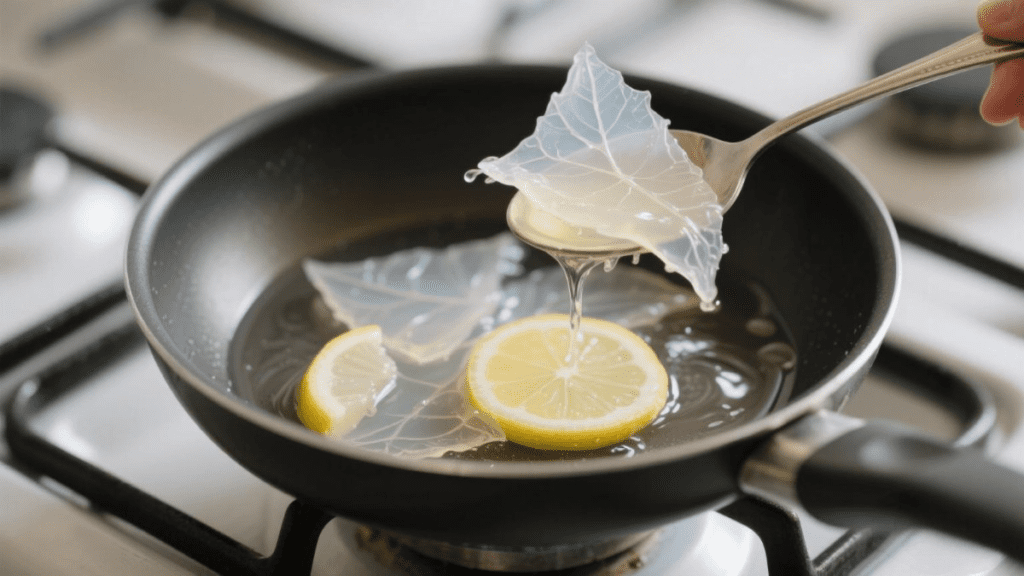
5) Soak gelatine leaves in cold water for 5–10 minutes.
They must go fully floppy.
6) Squeeze out excess water, then dissolve with heat.
Add the squeezed leaves to a small pan with a splash of lemon juice or a spoon of warm yolk base, then heat gently just until clear.
You know it is ready when… the liquid is completely clear with no jelly threads clinging to the spoon.
Key Mary rule: never boil gelatine; high heat weakens its setting power.
Whip the Cream to the Right Peak
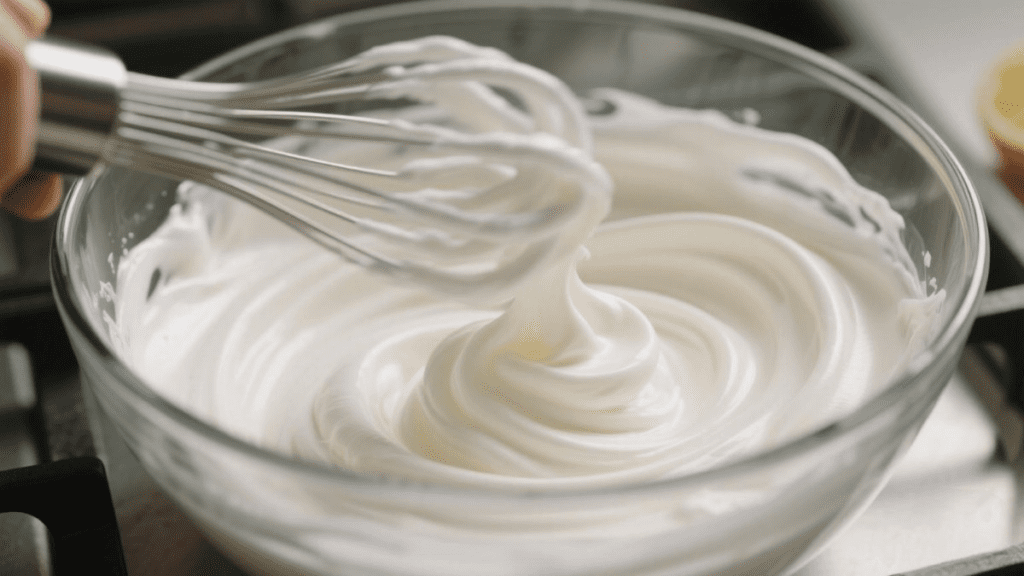
7) Whip double cream to soft peaks.
Stop when it holds a soft mound that flops at the tip.
You know it is ready when… the whisk leaves visible trails, but the cream still looks lush and spoonable, not stiff or grainy.
If you’re using Greek yogurt/crème fraîche, fold it into the cream now.
Whisk the Whites for Lift Without Dryness
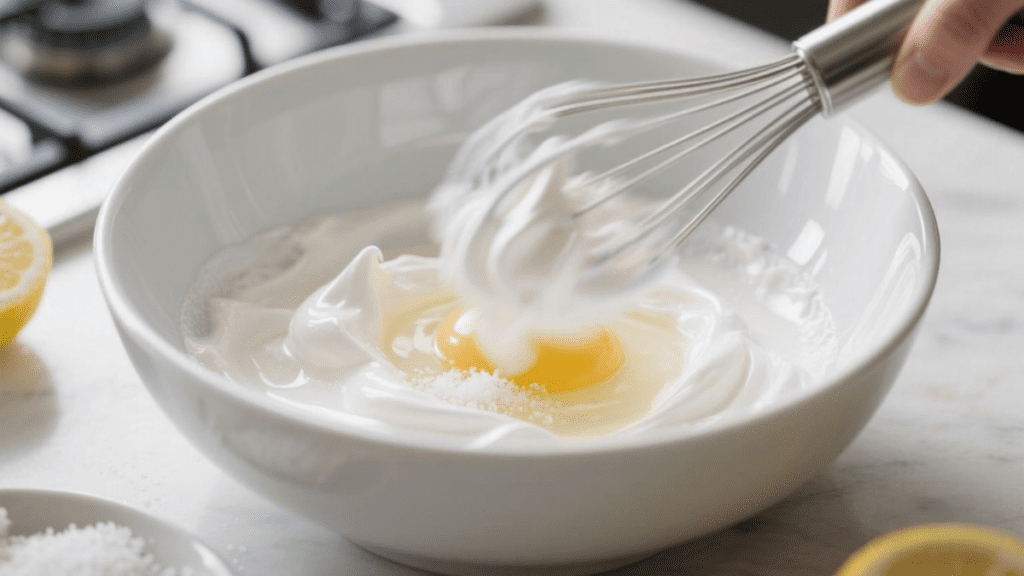
8) Whisk egg whites with a pinch of salt to stiff peaks.
Use a clean bowl—no grease.
You know it is ready when… you can turn the whisk upright and the peak stands proudly, but the foam still looks glossy, not clumpy.
Dry, dull whites fold badly and leave a lumpy soufflé.
Combine Without Losing the Air
9) Stir gelatine into the warm lemon base first.
This spreads it evenly before it meets the cold ingredients.
You know it is ready when… the lemon base looks uniform and slightly more satiny, with no oily patches.
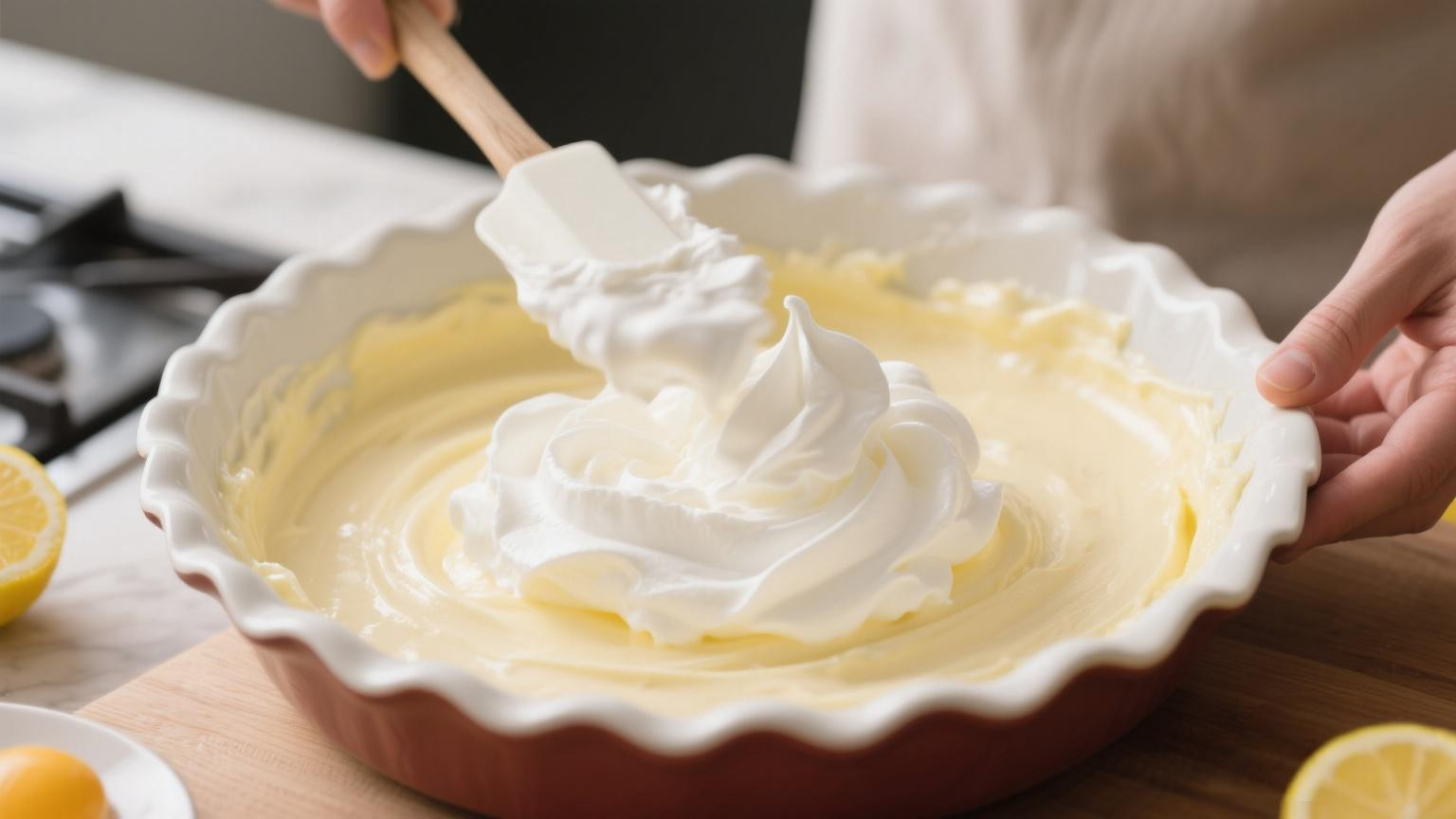
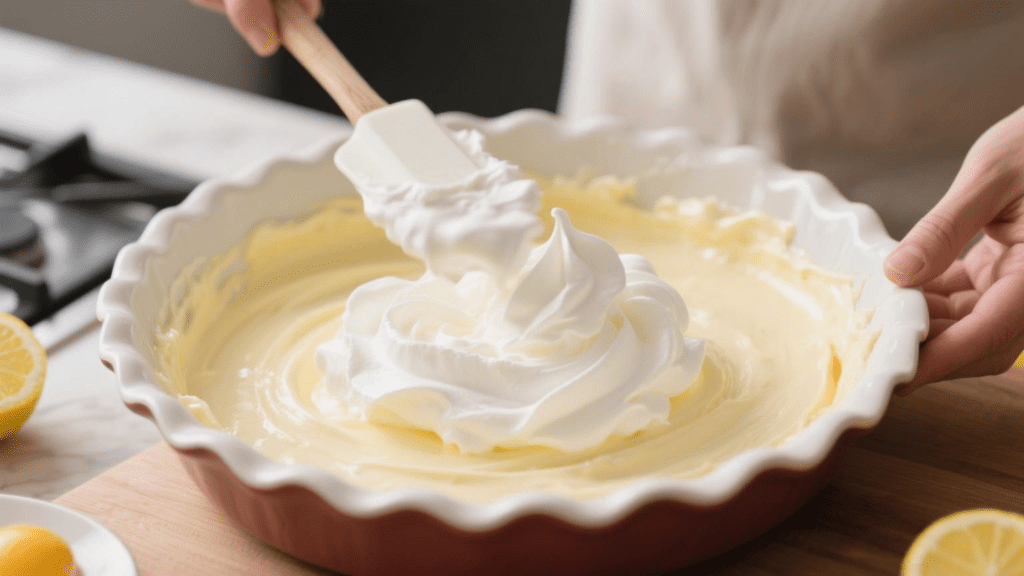
10) Fold in the cream, then the egg whites.
First fold the whipped cream into the lemon base.
Then fold in the egg whites in three additions, using a large spoon or spatula, cutting down and lifting up.
You know it is ready when… the mixture looks pale, airy, and mousse-like, with only a few faint white streaks allowed.
Don’t stand chatting here—once the gelatine cools, it starts setting quietly in the bowl.
Fill, Chill, and Set With a Clean Slice
11) Spoon into the collared dish(es).
Tap once very lightly to settle big air pockets, then level the top.
You know it is ready when… the surface is smooth and holds a soft swirl without sinking immediately.
12) Chill for at least 6 hours (overnight is best).
Keep it cold and undisturbed.
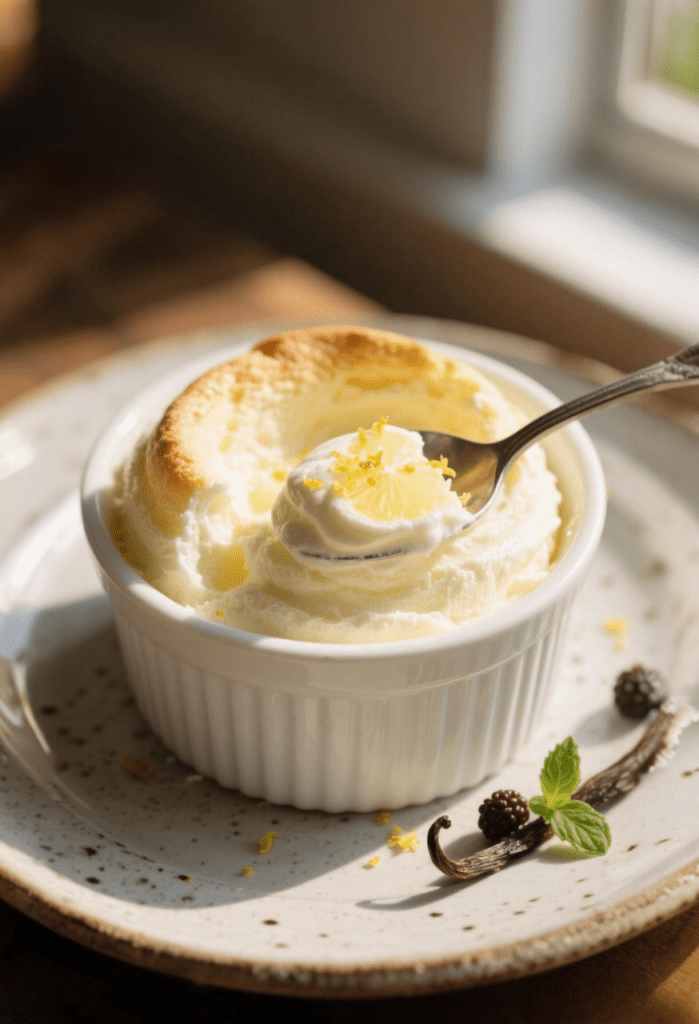
You know it is ready when… the soufflé feels firm at the edges and softly set in the centre; a spoon leaves a clean scoop, not a puddle.
To serve, peel away the collar carefully for that classic “risen” look.
Troubleshooting: Avoiding the “Soggy Bottom”
Problem: Weeping (liquid pooling at the base).
Cause: gelatine not fully dissolved, or the mixture was too warm when combined and then chilled slowly.
Fix: dissolve gelatine until perfectly clear; chill promptly in the coldest part of the fridge (not the door).
Problem: Rubbery or bouncy set.
Cause: too much gelatine or boiled gelatine (damaged network that sets harshly).
Fix: follow leaf count/grams for your brand; heat only until dissolved—never boiling.
Problem: Soufflé won’t rise above the rim.
Cause: whites under-whipped, or folding too vigorous.
Fix: whisk whites to glossy stiff peaks; fold with large, calm strokes, stopping as soon as combined.
Problem: Grainy texture.
Cause: cream over-whipped or sugar not dissolved in the base.
Fix: whip cream to soft peaks only; use caster sugar and warm the yolks gently until smooth.
Problem: Split or curdled lemon base.
Cause: overheated yolks.
Fix: keep the bain-marie at bare simmer; whisk constantly and pull off the heat the moment it thickens.
Storage & Freezing (Moist, Light, and Stable)
Fridge:
Store covered in the fridge for up to 2 days.
Use a cake box or loosely tented foil so it doesn’t pick up fridge smells, and keep it away from strong savoury foods.
You know it’s still at its best when… it scoops cleanly and the surface stays dry and satiny, not sticky.
Freezing (possible, but not ideal):
Cold soufflé can be frozen, but the foam may lose some finesse on thawing.
- Freeze in the dish (collar removed), wrapped well: 2 layers cling film + 1 layer foil, up to 1 month.
- Thaw overnight in the fridge.
- Don’t thaw at room temp; condensation can cause a damp surface and slight weep.
You know it has thawed properly when… the centre is evenly soft-set and no icy firmness remains at the base.
FAQ (Cold Lemon Soufflé, Mary Berry Style)
Can I make cold lemon soufflé without gelatine?
Not in the classic Mary Berry sense.
Without gelatine, you’re relying on whipped cream alone, which gives a mousse that won’t hold that soufflé “rise” for long.
Can I use powdered gelatine instead of leaves?
Yes, but measure by grams and bloom it in cold water first.
Leaves are simply more consistent for home bakers.
Why did my soufflé collapse after chilling?
Usually under-whipped whites, over-folding, or the mixture sat too long before chilling and began setting in the bowl.
Once combined, spoon and chill promptly.
Do I need a collar?
If you want that classic height above the rim, yes.
Without a collar it will still be scrumptious, just flatter like a set lemon mousse.
Can I make it the day before?
Yes—overnight is ideal for the cleanest set.
Keep it covered so it stays moist and doesn’t form a skin.